Early American
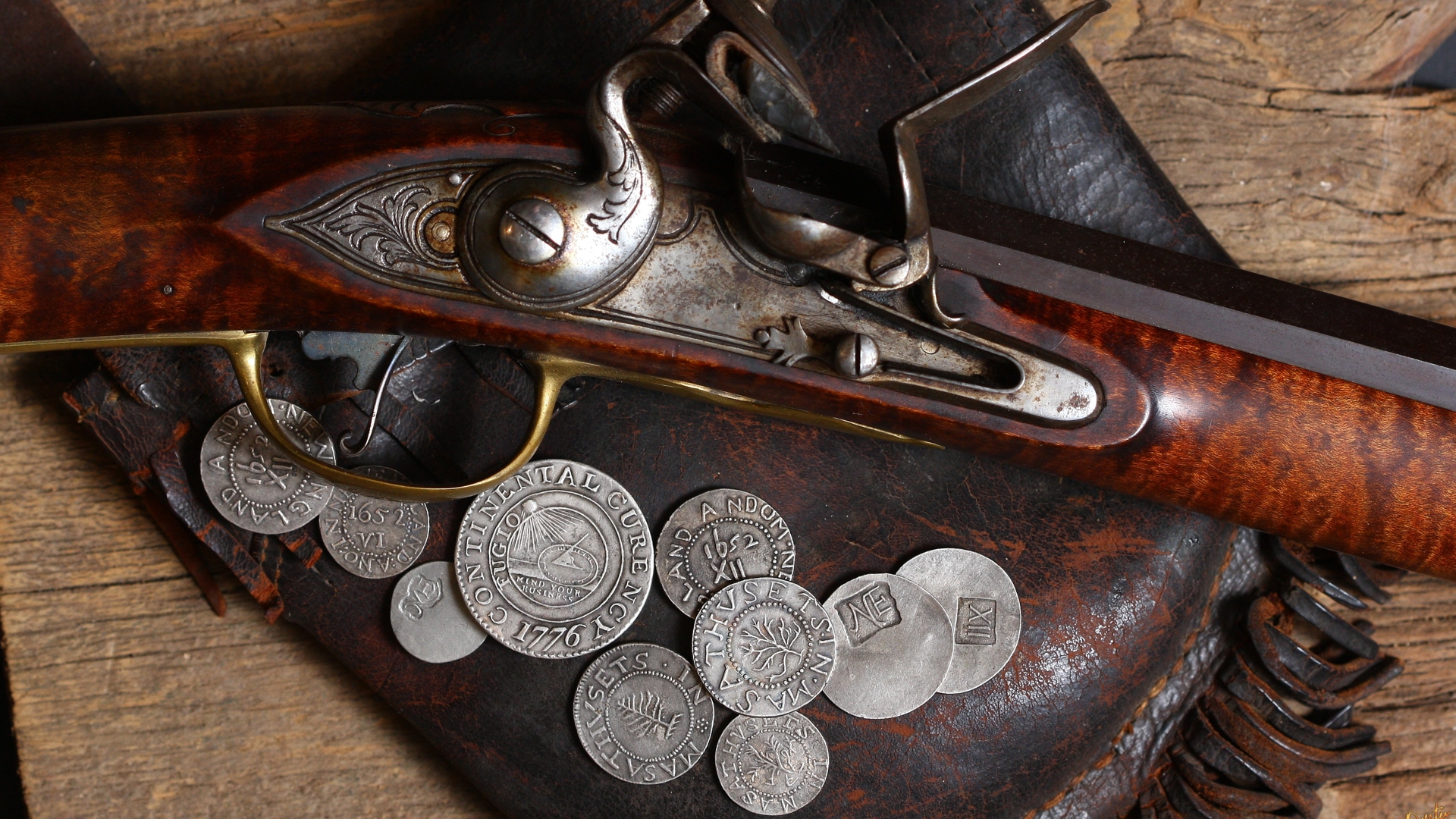
The history of Early American Coins Coin Replicas offers more than 33 varieties of Colonial and Early American Coin Replicas that have been recreated from impressions of the original coins.
For most of the 17th century, coins were sparsely circulated throughout the North American colonies. As a result, early settlers developed a barter system that included tobacco, gun powder, musket bullets, grain, fish, cattle, furs, and other commodities. The general court of Massachusetts even established set values for trade of Indian wampum.
Prior to the establishment of the United States Mint in 1792, historical records indicate that colonial coins came mainly from Spanish South America, England, Ireland, Portugal, Holland, France, and Germany.
In the 18th century, copper coins, most likely originating from England or Ireland, were used for small change, while Spanish silver and gold coins struck mainly in Mexico, Chile and Peru were used for larger transactions. Spanish silver coins were legal tender in the USA until 1859.
Read more about European currencies used by the colonists of early North American and the post-Colonial period.